


Every time Eddie Murphy steps into the spotlight, that electric confidence traces back to one woman who never sought fame herself. Long before the Saturday Night Live sketches, the billion-dollar box office grosses, and the Golden Globe trophies, there was a telephone operator in New York City fighting to keep her family from unraveling. Lillian Murphy wasn’t a celebrity. She didn’t walk red carpets or give interviews to Variety. But she was the backbone of a family that survived murder, illness, and grinding poverty—and still produced one of Hollywood’s most enduring dynasties. If you think you know Eddie Murphy’s origin story, you don’t know the half of it until you know hers.
Lillian Murphy was a New York-born telephone operator and the mother of comedy icon Eddie Murphy and actor Charlie Murphy. After the murder of her first husband left her widowed with two young sons, she battled serious illness, navigated the foster care system, and later built a blended family with her second husband, Vernon Lynch Sr. She died in 2000 at the age of 61.
| Attribute | Details |
|---|---|
| Full Name | Lillian Murphy (née Laney; later Lillian Murphy Lynch) |
| Date of Birth | March 7, 1939 |
| Age at Death | 61 years old |
| Nationality | American |
| Profession | Telephone operator |
| Known For | Mother of Eddie Murphy and Charlie Murphy |
| Net Worth | Not publicly disclosed |
Early Life and Family Background
Born Lillian Laney on March 7, 1939, in New York City, Lillian Murphy entered the world during a pivotal moment in American history. The Great Depression was winding down, World War II was brewing overseas, and millions of African American families were migrating north from the Jim Crow South in search of industrial jobs and social mobility. Lillian’s own family roots reportedly traced back to North Carolina, placing her within that massive demographic shift that reshaped urban America.
Growing up in New York during the 1940s and 1950s meant navigating a city that was simultaneously full of promise and riddled with segregation. Housing discrimination was rampant. Educational opportunities for Black students were underfunded and undervalued. Yet the culture was undeniably vibrant. Harlem was booming. Jazz filled the airwaves. And in Brooklyn, where Lillian would eventually settle, tight-knit communities were building lives against the odds.
Details about her parents, siblings, and early schooling remain sparse. Unlike her famous sons, no reporter sat down with Lillian Murphy to document her childhood memories. What we can piece together comes from census-adjacent records, family tree databases, and the few interviews where Eddie and Charlie alluded to their upbringing. The picture that emerges is familiar to many working-class Black families of the era: modest apartments, long work hours, church on Sundays, and an unshakable belief that the next generation could do better.
By her late teens, Lillian was already navigating the adult world with the pragmatism that would define her life. She wasn’t chasing stardom. She was chasing stability. And in the late 1950s, she found a partner who shared her quick sense of humor, if not her long-term fate.
Education and Personal Life
Specifics about Lillian Murphy‘s formal education have never been made public. In an era when many young women—particularly young Black women—left high school early to contribute to household income, it is possible that her classroom years ended before graduation. But to focus only on diplomas misses the education she received in survival, budgeting, and emotional labor.
In the late 1950s, Lillian met Charles Edward Murphy. He was a transit police officer, but his real passion was performance. An amateur comedian and actor, Charles reportedly had the kind of charisma that filled a room. The two married and set up home in Brooklyn, where they started their family.
Their first son, Charles Quinton Murphy—better known to the world as Charlie Murphy—was born on July 12, 1959. Less than two years later, on April 3, 1961, Edward Regan Murphy arrived. For a brief window, the Murphys looked like any other young family in Bushwick: two parents, two boys, and the noisy optimism of postwar America.
But the marriage was troubled. According to Eddie’s later statements to People Magazine and other outlets, his parents had separated by the time he was three. The split was followed by something far worse. On November 2, 1969, Charles Edward Murphy was murdered by a woman he had been romantically involved with. Eddie, then eight years old, would later describe it to journalists as a crime of passion. “If I can’t have you, no one else will,” he summarized, decades later, in interviews that still carry the weight of a child’s confusion.
Suddenly, Lillian Murphy was a widow. A single mother. And the sole protector of two boys who had just lost their father to violence.
Lillian Murphy’s Career and Quiet Achievements
Lillian Murphy spent her working life as a telephone operator. It was not a job that attracted admiration or headlines. It was repetitive, sedentary, and emotionally taxing. Day after day, she connected calls, mediated disputes between strangers, and served as an invisible bridge between homes, hospitals, and businesses across New York City.
But that job mattered. It provided a paycheck when paychecks were everything. It offered benefits in an era when employer-provided healthcare could mean the difference between survival and catastrophe. And it gave Lillian a front-row seat to the full spectrum of human behavior—the angry, the grieving, the flirtatious, the desperate. Some biographers have speculated that this daily exposure to human nature served as an unintentional masterclass in observation, a skill her youngest son would eventually turn into an art form.
In the early 1970s, Lillian Murphy remarried. Her new husband, Vernon Lynch Sr., worked as a foreman at an ice cream plant. He was a steady, working-class man with no Hollywood ambitions. Together, they moved the family to Roosevelt, New York, a suburban community on Long Island that offered more space and better schools than their Brooklyn apartment. From this marriage came a third son, Vernon Lynch Jr., who would later build a career behind the scenes in talent management and production.
Also Read: Who Is Amy Reimann? Exclusive Look at Dale Earnhardt Jr.’s Wife
If you search for Lillian Murphy‘s name in entertainment archives, you won’t find film credits or album releases. She did not publicize her achievements. They were structural. She kept her sons enrolled in school during an era when the school-to-prison pipeline was already beginning to tighten around Black communities. She made sure they had food, shelter, and discipline. And when Eddie began doing impressions of celebrities at age fifteen—Al Green, Muhammad Ali, Bill Cosby—she didn’t shut him down. She let him perform in the living room. That decision, seemingly small, was monumental.
In many ways, Lillian Murphy embodied the invisible labor that makes stardom possible. Every comedian who credits their mother on an awards stage is acknowledging a version of her story: the late nights, the sacrificed dreams, and the refusal to collapse under pressure.
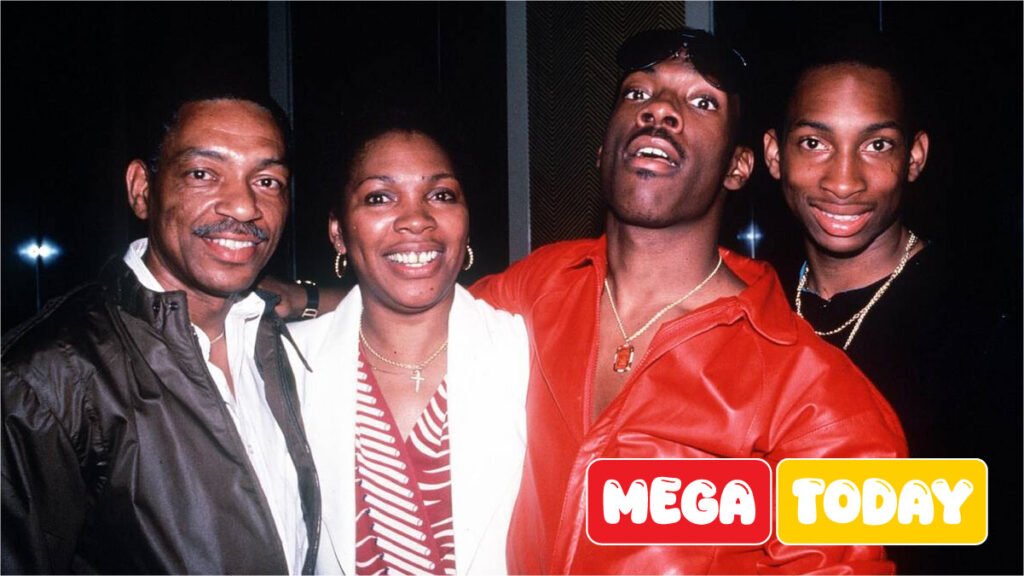
Relationship with Eddie Murphy
The bond between Lillian Murphy and her youngest son was not built on easy afternoons. Crisis forged it. When Eddie was eight years old, shortly after his father’s murder, his mother fell gravely ill. Multiple sources indicate she was hospitalized with tuberculosis, a bacterial lung infection that still carried significant stigma and mortality risk in 1960s America.
With no extended family able to take the boys in, Eddie and Charlie spent approximately one year in foster care. It was a disorienting, painful chapter. Eddie has spoken about it candidly in interviews over the years, noting that the experience sharpened his observational skills and gave him an early education in how to read a room. What he rarely emphasizes, but what is equally true, is that Lillian Murphy fought to reclaim them.
She recovered. She got her boys back. And she moved them to Roosevelt, where Vernon Lynch Sr. helped provide the stability that foster care had temporarily disrupted. By the time Eddie was a teenager, the family had settled into a rhythm that allowed ambition to breathe. At fifteen, Eddie heard Richard Pryor’s album That Nigger’s Crazy and decided he wanted to be a comedian. By nineteen, he was performing stand-up in clubs around New York City. By twenty, he was a cast member on Saturday Night Live.
Throughout that meteoric rise, Lillian Murphy remained a grounding force. She did not give interviews to Billboard or pose for paparazzi. She stayed in Roosevelt, living the same working-class life she had always lived. But her influence permeated Eddie’s work. His comedy has always been rooted in family dynamics, in class tensions, in the absurdities of growing up Black in America. Those weren’t abstract concepts for him. They were the wallpaper of his childhood.
When Eddie purchased homes, threw legendary holiday parties, and eventually raised ten children of his own, he was replicating—on a grander scale—the family-centric values Lillian Murphy had instilled. In a rare conversation with People Magazine, Eddie alluded to the importance of family legacy, noting that his own brood was a source of unexpected joy. That sentiment doesn’t emerge from nowhere. It comes from a mother who, despite every reason to become cynical, chose to prioritize her children above all else.
Net Worth and Lifestyle 2026
Lillian Murphy never accumulated a personal fortune. No real estate portfolio carried her name. No brand endorsements or book deals padded her bank account. As a telephone operator and later a homemaker in Roosevelt, New York, she lived a modest, working-class existence from birth until death. Her net worth was not measured in dollars.
Her sons, however, built an empire. According to Forbes and industry analysts, Eddie Murphy’s films have grossed over $6.7 billion worldwide. At his commercial peak in the 1980s and 1990s, he commanded salaries exceeding $20 million per picture. His voice work as Donkey in the Shrek franchise alone generated hundreds of millions. Charlie Murphy established his own successful career in film and television, most notably on Chappelle’s Show, before his death from leukemia in 2017. Vernon Lynch Jr. has worked as a producer and talent manager, maintaining the family’s behind-the-scenes influence.
The lillian murphy grandchildren now number at least a dozen. Eddie Murphy has ten children, including Bria (an actress and model), Miles (a model), Shayne (a model and actress), Zola (an actress), and Bella (an actress). Several have already appeared in films and campaigns. Charlie Murphy’s children have also maintained connections to the industry. The Murphy family name, in 2026, represents a multi-generational entertainment dynasty that spans comedy, film, music, fashion, and production.
Yet the lifestyle that Lillian Murphy actually lived was defined by restraint. She didn’t see the Beverly Hills mansion. She didn’t attend the Dreamgirls premiere. Her reward was quieter: the knowledge that her sons had survived, thrived, and broken a cycle of poverty that could have easily consumed them.
Frequently Asked Questions About Lillian Murphy
Who is Lillian Murphy, Eddie Murphy’s mother?
Lillian Murphy eddie murphy mother was a New York-born telephone operator who raised two of comedy’s most recognizable voices. Born Lillian Laney in 1939, she survived the murder of her first husband, a battle with tuberculosis, and a year of foster care for her sons before rebuilding her family in Roosevelt, New York. She died in 2000 at age 61.
What was Lillian Murphy’s cause of death?
The exact lillian murphy cause of death was never publicly disclosed in major media outlets or obituary records. Some biographical sources note that she had previously battled tuberculosis, which led to her sons spending time in foster care during the late 1960s. However, the circumstances of her death in August 2000 remain private.
How old was Lillian Murphy?
Born on March 7, 1939, she was 61 years old at the time of her death in August 2000.
Was Lillian Murphy still alive during Eddie’s SNL years?
Yes. Eddie joined the cast of Saturday Night Live in 1980 and remained through 1984. His mother was alive throughout his rise to superstardom, though she maintained a private life away from the entertainment press. She passed away in 2000, long after he had become a global icon.
Who was Lillian Murphy Lynch?
Lillian murphy lynch refers to the same person after her remarriage to Vernon Lynch Sr. Following the death of Charles Edward Murphy, she married Lynch, a foreman at an ice cream plant. She took the Lynch surname while retaining Murphy, and the couple had one son together, Vernon Lynch Jr.
Did Lillian Murphy have grandchildren?
Yes. The lillian murphy grandchildren include Eddie Murphy’s ten children and Charlie Murphy’s offspring. Several grandchildren have already entered the entertainment industry as actors, models, and media personalities, continuing the family legacy into a third generation.
Who was Vernon Lynch to Lillian Murphy?
Lillian murphy vernon lynch were husband and wife. Vernon Lynch Sr. was her second husband, a working-class man who helped raise Eddie and Charlie in Roosevelt, New York. Their son, Vernon Lynch Jr., went on to work in entertainment management, keeping the family connected to the industry.
Is there a Lillian Murphy Wikipedia page?
As of 2026, there is no standalone Wikipedia page exclusively dedicated to Lillian Murphy. Information about her life appears primarily within Eddie Murphy’s Wikipedia biography and entertainment databases such as IMDb.
How many children did Lillian Murphy have?
She had three sons: Charlie Murphy and Eddie Murphy (with Charles Edward Murphy), and Vernon Lynch Jr. (with Vernon Lynch Sr.).
What is known about Lillian Murphy’s obituary?
No major national obituary was widely circulated at the time of her death. The family grieved privately, consistent with the low-profile life she had maintained throughout her years.
Visit Our Site for More: MegaToday
Stay connected with MegaToday—reach out to us for inquiries, feedback, or partnerships.
