

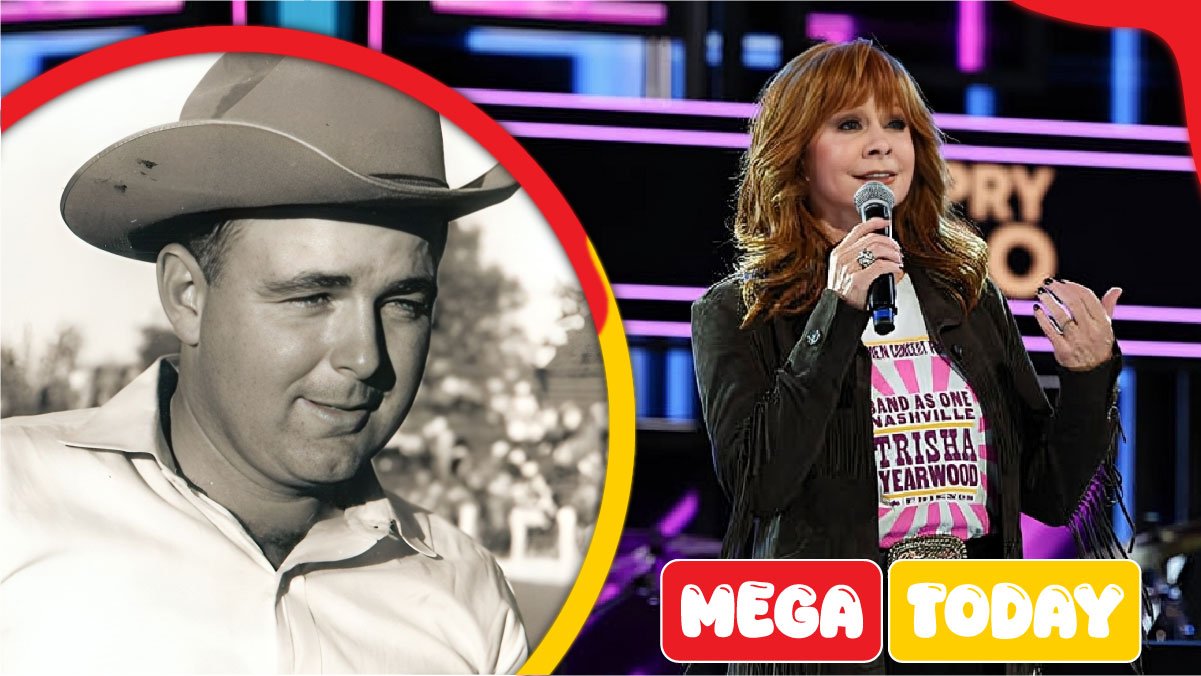
Before Reba McEntire ever stepped into a Nashville spotlight, another McEntire was already a household name in arenas across the American West. Clark McEntire wasn’t “Reba’s dad” back then. He was simply “McEntire” — a rope-slinging, steer-tripping force of nature who roped his way into three world championships and two halls of fame. Yet somewhere between the dust of the Pendleton Round-Up and the glitter of the Grand Ole Opry, his story got folded into hers. It’s time to unfold it.
Clark McEntire was a three-time World Champion Steer Roper, a Pro Rodeo Hall of Fame inductee, and the patriarch of one of country music’s most iconic families. Born in rural Oklahoma in 1927, he built a life on horseback, married his sweetheart Jacqueline in 1950, and raised four children — including a future Queen of Country — on an 8,000-acre working ranch.
Quick Facts
| Fact | Detail |
| Full Name | Clark Vincent McEntire |
| Date of Birth | November 30, 1927 |
| Place of Birth | Graham (Limestone Gap), Oklahoma |
| Date of Death | October 23, 2014 |
| Age at Death | 86 |
| Place of Death | Coalgate, Oklahoma |
| Nationality | American |
| Profession | Professional Rodeo Cowboy, Cattle Rancher |
| Known For | Three-Time World Champion Steer Roper; Father of Reba McEntire |
| Spouse | Jacqueline “Jackie” Smith (m. 1950) |
| Children | Alice Foran, Pake McEntire, Reba McEntire, Susie McEntire |
| Parents | John McEntire (father), Alice McEntire (mother) |
| Major Awards | World Champion Steer Roper (1957, 1958, 1961); Pro Rodeo Hall of Fame Inductee (1979) |
| Net Worth at Death | Not publicly disclosed; reportedly modest, middle-class estate |
Early Life and Family Background
Clark McEntire arrived on November 30, 1927, in Graham, Oklahoma — a speck of a town in the southern part of the state where the red dirt meets honest ambition. Some records list his birthplace as Limestone Gap, with the Kiowa post office handling the mail. Either way, the setting was the same: open range, tight-knit kin, and a family tethered to livestock.
His mother, Alice, taught school. His father, John McEntire, was a pioneer steer roper who won the world championship in 1934 and later earned induction into the Rodeo Hall of Fame at the National Cowboy & Western Heritage Museum in 1984. The McEntires were rodeo royalty before the word “rodeo” was even mainstream. John and his brothers would saddle up, lead spare horses across country, and ride for days to reach small roping shows and matched contests. The elder McEntire reportedly joked that if the house caught fire, young Clark should ignore it and keep roping.
From the moment Clark could grip a lariat, he was practicing on anything that stood still. By the time most boys were worrying about algebra, he was worrying about loop size and horse speed.
Education and Personal Life
Education took a backseat to vocation. In the ninth grade, Clark stayed home to help his father gather steers in the hills. He never returned to the classroom. It wasn’t a rebellion — it was simply the reality of ranch life in 1940s Oklahoma. The cattle needed tending, the ropes needed throwing, and Clark had already found his calling.
On March 17, 1950, he married Jacqueline Smith, a spirited woman he spotted carrying two buckets of water to some hogs. According to family lore, Clark thought, “A gal like her fits ‘purty’ good in my business.” Jackie would later become a schoolteacher, a mother of four, and a Cowgirl Hall of Fame inductee in her own right. Their partnership lasted more than six decades.
Together, they raised Alice, Pake, Reba, and Susie on the clark mcentire ranch near Chockie, Oklahoma — an 8,000-acre spread where cattle outnumbered people by the thousands. It was a working operation, not a celebrity estate. The kids learned to ride before they could read, and Clark made sure they understood that daylight was for work and evenings were for fun.
Career and Individual Achievements
Clark McEntire didn’t just compete in the clark mcentire rodeo circuit — he dominated it. At age 19, he became the youngest steer roper ever to win a world championship, claiming the all-around title at the 1947 Pendleton Round-Up. The win was historic: he placed in both steer roping and calf roping to capture the prestigious Sam Jackson Trophy. His father and five uncles, who had nearly bankrupted themselves buying him horses and stock, finally got their return — though John McEntire said it was “worth lots more than money.”
The championships kept coming. Clark won the World Champion Steer Roping title three times — in 1957, 1958, and 1961. He also claimed top honors at Cheyenne Frontier Days in 1954 and 1961, and he competed at the West of the Pecos Rodeo so many times that locals knew the drill: if Shoat Webster didn’t win the roping, Clark did.
In 1979, the Pro Rodeo Hall of Fame inducted him, making him the first son of an inductee to earn that honor. His father, John, had been inducted in 1984 — so both generations now carried the distinction. In 2019, Clark was posthumously inducted into the Hall of Great Westerners at the National Cowboy & Western Heritage Museum in Oklahoma City, cementing a legacy that stretched from the 1930s into the 2020s.
Clark never worked for anyone but himself. He believed in the free enterprise system with the same intensity he brought to the arena. He trained steers, raised cattle, and roped until his body told him otherwise. He was a star long before his daughter became one.
Relationship with Reba McEntire
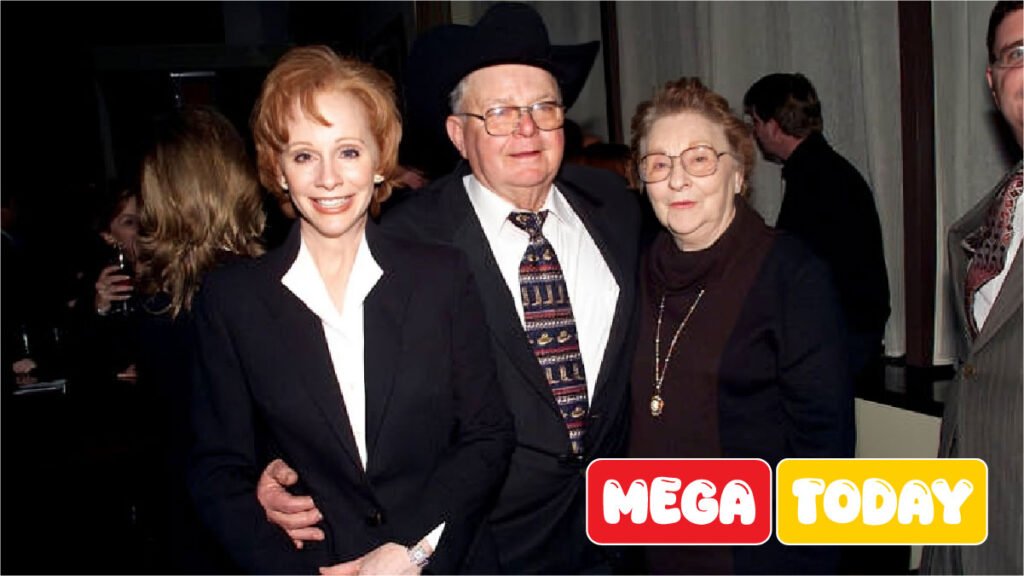
Most profiles of Clark start with Reba. This one ends with her — because that’s how Clark probably would have wanted it. He was proud of his daughter, no question. But he was also a man with his own trophies, his own identity, and his own hard-won reputation.
Reba has spoken openly about the lessons her father passed down. “The thing I learned from Daddy is to be competitive,” she told The Oklahoman. “He made a living by competing and so have I. The difference in his competition and mine was his winning was determined by a stopwatch. Mine was voted on.”
Also Read: Who Is Kate Linden Weller? Exclusive Look at Peter Weller’s Daughter
She also inherited his caution. “As I’ve grown older, I find I listen like Daddy did before I make a decision. I get all the information first.”
The childhood stories are pure Oklahoma. Reba began working the clark mcentire ranch at age five. When Clark needed someone to move grain in his pickup, he grabbed whichever kid was closest. Reba was so small that he placed a 50-pound bag of cattle feed on the driver’s seat so she could see over the wheel. She’d steer in “granny gear” while he coached her to “go as straight” as possible. She still skinned plenty of elm trees. When Jackie asked about the damage later, Clark blamed a hired hand rather than sell out his little girl.
During gathering season, Clark cooked breakfast before sunrise: bacon swimming in grease, fried eggs swimming in grease, white gravy made from the same grease, and his famous cowboy bread. Reba remembered those mornings with the kind of detail that only comes from real love.
In 1979, Reba released the song “Daddy” on her album Out of a Dream. It wasn’t a hit in the traditional sense, but it became one of the most meaningful clark mcentire songs in her catalog — a tender tribute to the man who taught her to work hard, compete fair, and never count her money in front of others.
Clark’s rules were simple and non-negotiable:
Don’t play cards in the daytime.
Don’t watch TV in the daytime.
Don’t count your money in front of others.
“The daytime was for work and the evenings were for fun,” Reba wrote in her book Not That Fancy. She still makes her bed every morning because Daddy insisted on it.
Net Worth and Lifestyle 2026
Let’s be clear about something: the McEntires were never rich by celebrity standards. Multiple sources, including Forbes and industry biographers, note that Reba’s family was solidly middle-class — stable, hardworking, and comfortable, but not wealthy. The clark mcentire net worth at the time of his death was never publicly disclosed, and no estate records have surfaced to suggest a multi-million-dollar fortune.
What Clark had was land, livestock, and legacy. The ranch in Chockie was a working cattle operation spanning 8,000 acres. He ran several thousand head of cattle per year and handled the business himself. There were no corporate backers, no branding deals, no sponsored content — just a cowboy, his family, and the animals they raised.
In 2026, the value of Oklahoma ranchland has appreciated significantly, and properties of that size in Coal County can command serious money. But during Clark’s lifetime, the ranch was a livelihood, not an investment portfolio. Reba would go on to build her own fortune — estimated by Forbes to be in the range of $95 million — but her father’s wealth was measured in championship buckles, not bank statements.
If you’re searching for a clark mcentire obituary or clark mcentire find a grave records, his burial details reflect that same modesty. He was laid to rest in Oklahoma, close to the soil he worked his entire life.
Conclusion
Clark McEntire deserves more than a footnote in his daughter’s Wikipedia page. He was a three-time world champion, a Hall of Fame cowboy, a self-made rancher, and a father who raised four kids with a firm hand and a sharp wit. He rode in the era before rodeo became a slick, televised sport — when champions slept in their trucks and measured success in stopwatch seconds, not social media followers.
The next time you hear Reba sing about resilience, hard work, or Oklahoma roots, remember where that DNA came from. Clark McEntire didn’t just raise a country music icon. He was an icon in his own right — a man who proved that the best legacy isn’t inherited. It’s roped, one steer at a time.
Frequently Asked Questions
Who is Clark McEntire?
Clark McEntire was a three-time World Champion Steer Roper, a 1979 Pro Rodeo Hall of Fame inductee, and the father of country music superstar Reba McEntire. He was born in 1927 in Graham, Oklahoma, and spent his life as a professional rodeo cowboy and cattle rancher.
What was Clark McEntire’s cause of death?
The clark mcentire cause of death was attributed to declining health following a stroke he suffered in 2011. He passed away on October 23, 2014, in Coalgate, Oklahoma, at the age of 86.
Where was Clark McEntire’s ranch?
The clark mcentire ranch was located near Chockie, Oklahoma. It was an 8,000-acre working cattle ranch where Clark raised several thousand head of cattle per year and where Reba McEntire grew up.
Did Clark McEntire win any world championships?
Yes. Clark McEntire won the World Champion Steer Roping title three times — in 1957, 1958, and 1961. He also won the all-around at the 1947 Pendleton Round-Up at age 19, making him the youngest steer roper to achieve that honor at the time.
Is there a song about Clark McEntire?
Yes. In 1979, Reba McEntire recorded the song “Daddy” as a tribute to her father. It appears on her album Out of a Dream and remains one of the most personal clark mcentire songs in her discography.
Was Clark McEntire in the Hall of Fame?
Yes. Clark was inducted into the Pro Rodeo Hall of Fame in 1979. In 2019, he was posthumously inducted into the Hall of Great Westerners at the National Cowboy & Western Heritage Museum in Oklahoma City.
What was Clark McEntire’s net worth?
The clark mcentire net worth was never publicly disclosed. According to sources including Forbes and various biographers, the McEntire family was solidly middle-class during Clark’s lifetime, with their wealth tied to land and livestock rather than liquid assets.
Written by an entertainment journalist covering celebrity profiles and pop culture.
Visit Our Site for More: MegaToday
Stay connected with MegaToday—reach out to us for inquiries, feedback, or partnerships.
