

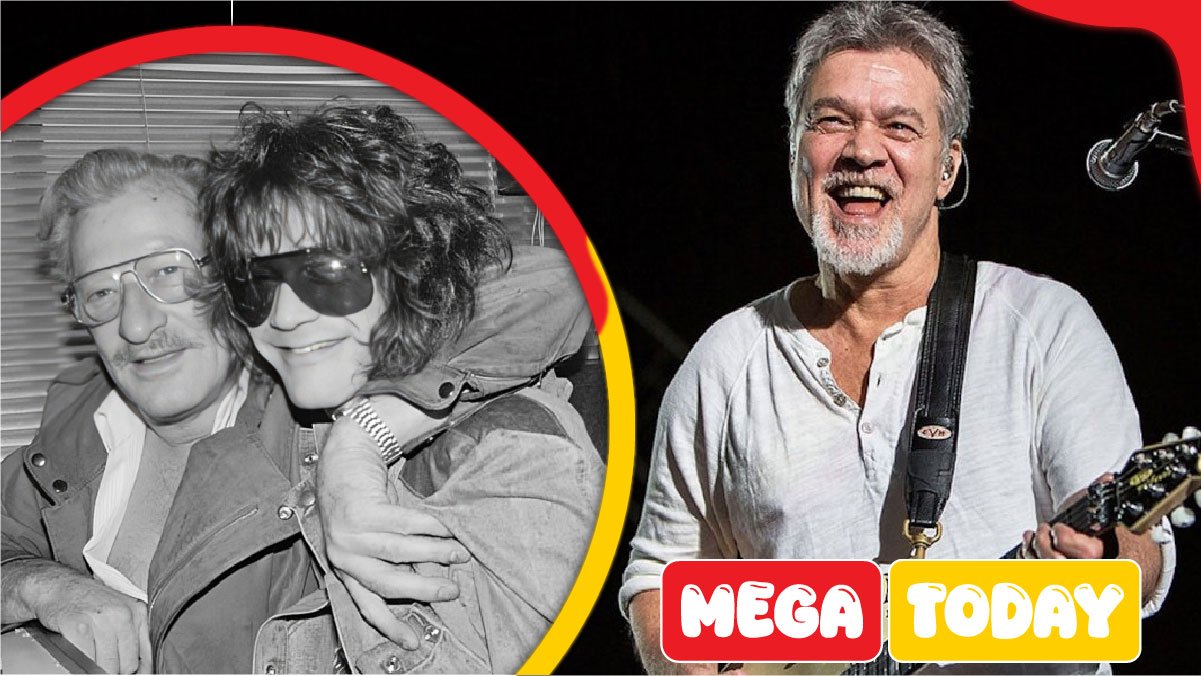
Before Eddie Van Halen ever tapped a fretboard into legend, before the striped guitars and sold-out arenas, there was a Dutch jazzman in Pasadena who insisted his sons learn piano. Jan Van Halen never became a household name on his own, yet his fingerprints are all over one of the biggest rock dynasties in history. Most fans know him only as Eddie Van Halen’s father. But who was the man behind the myth?
Jan Van Halen was a Dutch-born jazz pianist, clarinetist, and saxophonist who immigrated to the United States in 1962. He is best known as the father of Eddie and Alex Van Halen, whose band Van Halen sold over 80 million records worldwide. Jan recorded alongside his sons on the 1982 album Diver Down and instilled the classical discipline that underpinned Eddie’s revolutionary guitar technique.
| Quick Facts | Details |
|---|---|
| Full Name | Jan Van Halen |
| Date of Birth | 1920 |
| Place of Birth | Amsterdam, Netherlands |
| Date of Death | December 9, 1986 |
| Age at Death | 66 |
| Nationality | Dutch-American |
| Profession | Jazz Musician (Pianist, Clarinetist, Saxophonist) |
| Known For | Father of Eddie and Alex Van Halen; clarinet on Van Halen’s “Big Bad Bill (Is Sweet William Now)“ |
| Spouse | Eugenia Van Beers (m. 1949) |
| Children | Alex Van Halen, Eddie Van Halen |
| Net Worth | Not publicly disclosed |
| Resting Place | Cenotaph at Forest Lawn Memorial Park, Glendale, California (reportedly) |
Early Life and Family Background
Jan Van Halen entered the world in 1920 in Amsterdam, Netherlands, a city buzzing with jazz cafes and classical conservatories. According to sources, he caught the music bug early and was already performing professionally before he turned eighteen. The Netherlands had a thriving dance-band scene in the 1930s and 1940s, and young Jan cut his teeth playing clarinet and saxophone in local ensembles.
Then came World War II. Like many Dutch musicians of his generation, Jan eventually looked beyond Europe for opportunity. He relocated to the Dutch East Indies—modern-day Indonesia—after the war. It was there, thousands of miles from home, that he met Eugenia Van Beers, an Indo (Eurasian) woman born in Rangkasbitung, Java. The two married in 1949 and moved back to the Netherlands that same year.
Their first son, Alex, arrived in 1953, followed by Edward Lodewijk Van Halen in January 1955 in Nijmegen. The family lived modestly. Jan scraped together income from whatever gigs he could find, while Eugenia reportedly worked cleaning houses to keep the household afloat. Money was tight, but music was everywhere.
In 1962, the Van Halens made the life-altering decision to immigrate to the United States. They settled in Pasadena, California, a suburb of Los Angeles that would eventually honor the family with a permanent stage memorial, as reported by Billboard and local outlets. The move was classic immigrant ambition: swap instability for possibility, even if it meant starting from scratch.
Education and Personal Life
Jan Van Halen never attended a prestigious conservatory in the American sense. His education was the European working-musician grind—nightclubs, dance halls, and endless rehearsal. But he believed fiercely in formal training for his children.
By the time Alex and Eddie were around five years old, Jan Van Halen had both boys sitting at a piano bench. He enforced a rigid practice schedule. Eddie later told interviewers that he and Alex were “forced” into classical piano lessons, a discipline that initially felt like punishment. That foundation, however, would prove extraordinary. Eddie eventually won four consecutive classical piano competitions in his youth, a detail noted by IMDb and music historians alike.
Jan’s personal life was defined by simplicity. The family rented a modest home in Pasadena. Eugenia managed the household while Jan hustled for musician work in a country where jazz was evolving and rock and roll was beginning to dominate. He reportedly lost one of his fingers in an accident at some point in his career—an injury that, according to fan accounts and discussions on music forums, caused him to stop playing clarinet and saxophone. Piano became his primary outlet.
Despite the hardship, those who knew the family described Jan as warm and deeply proud of his Dutch heritage. He spoke English with an accent, cooked Indonesian dishes at home thanks to Eugenia’s influence, and maintained the old-world habit of strict musical drills.
Career and Individual Achievements
On paper, Jan Van Halen’s career looks like that of countless working jazz musicians: local gigs, small paychecks, and no hit records with his name on the cover. But that summary sells him short.
Before leaving Europe, Jan had established himself as a capable multi-instrumentalist. He played clarinet, saxophone, and piano across the Dutch jazz and dance-band circuit. The Dutch East Indies chapter of his life added another layer of cultural complexity—he performed in a Southeast Asian context where Indonesian rhythms and European harmonies collided.
After arriving in California, Jan continued performing wherever he could. Pasadena had a small but lively music scene in the 1960s and 1970s, and he found work at local clubs and private events. Yet the real pinnacle of his professional visibility came late in life, and it came through his sons.
In 1982, Van Halen released Diver Down, their fifth studio album. Nestled among rock tracks was a jaunty, old-timey cover called “Big Bad Bill (Is Sweet William Now).” Listen closely and you hear a swinging clarinet solo cutting through the mix. That was Jan Van Halen playing clarinet, making him one of the few parents ever to appear on a multi-platinum rock record with their children. Variety and music critics have since cited the track as a charming oddity in the Van Halen catalog—and a testament to the family’s musical DNA.
It remains the most widely distributed recording of Jan Van Halen’s playing. For a man who never had his own Billboard chart entry, sharing vinyl real estate with a band that defined 1980s rock was no small feat.

Relationship with Eddie Van Halen
The bond between Eddie Van Halen and Jan Van Halen was equal parts admiration and pressure. Eddie often spoke about his father’s intensity. Jan didn’t coddle his sons; he drilled them. Music wasn’t a hobby in the Van Halen house—it was homework.
That discipline birthed a paradox. Eddie rebelled against classical piano by picking up drums, then guitar. Alex, originally the guitarist, switched to drums. Yet Eddie’s piano training manifested in everything: his two-handed tapping technique mirrored keyboard intervals, and his harmonic sophistication separated him from blues-rock peers.
After Jan suffered a heart attack in May 1986, the family braced for the worst. He held on for several months but passed away on December 9, 1986, in Pasadena, at 66 years old. The timing was brutal. Van Halen was at the absolute peak of their fame—5150 had just topped the charts, and the band was filling stadiums. Eddie never got to share the full magnitude of what they built with the man who made him practice scales.
Years later, Eddie reportedly said of his father: “It was all for him.” That quote, circulated widely in fan communities and referenced in obituaries by People Magazine, encapsulates a lifetime of seeking approval. Jan Van Halen wasn’t just Eddie’s dad. He was the first critic, the first teacher, and the ghost at every encore.
Some unverified sources have suggested that Eddie carried guilt about not being able to do more for his parents financially before Jan’s death. What is confirmed is that Eddie and Alex remained deeply connected to their mother’s Indonesian heritage and Dutch roots throughout their lives.
Also Read: Who Is Shameka Crayon? Exclusive Look at Dr. Dre’s Sister
Net Worth and Lifestyle 2026
Jan Van Halen never accumulated the kind of wealth his sons would later command. During his lifetime, he lived as a working-class musician. There are no Forbes profiles of his finances, no real estate portfolios, and no trust funds bearing his name.
At the time of his death in 1986, the Van Halen brand was already generating millions—Van Halen II, Women and Children First, Fair Warning, and Diver Down had all gone multi-platinum, and 1984 was a global smash. But those riches flowed to the band and its members, not to Jan. He died before Eddie’s solo collaborations with Michael Jackson, before the Sammy Hagar era, and before the stadium tours that would gross nine figures.
In 2026, any “estate” associated with Jan Van Halen exists primarily in memorabilia and intellectual property tied to his lone official recording. Original pressings of Diver Down featuring his clarinet work remain collector’s items. Beyond that, his legacy is cultural rather than financial.
The family home in Pasadena and the neighborhood where Jan practiced with his boys have become pilgrimage sites for fans. A permanent stage memorial honoring the Van Halen family was unveiled in Pasadena, as covered by local news and entertainment outlets, cementing the geographic link between Jan’s humble American beginning and his sons’ superstardom.
Conclusion
Jan Van Halen was more than a footnote in a rock-star biography. He was a Dutch immigrant who crossed oceans, buried a finger in an accident that altered his trajectory, and still managed to record on one of the biggest rock albums of the 1980s. He drilled classical piano into two boys who would redefine American hard rock. He lived modestly, died too soon, and never saw the full empire his family name would build.
The next time you hear the clarinet swing through “Big Bad Bill,” remember: that is not a session musician. That is a father, a jazzman, and an immigrant who bet everything on music. Jan Van Halen didn’t headline arenas, but without him, the arenas might never have roared for Van Halen at all.
Frequently Asked Questions
Who is Jan Van Halen?
Jan Van Halen was a Dutch jazz pianist, clarinetist, and saxophonist born in 1920 in Amsterdam. He is best known as the father of rock legends Eddie and Alex Van Halen, and he performed clarinet on the Van Halen track “Big Bad Bill (Is Sweet William Now).”
What was the Jan Van Halen cause of death?
Jan Van Halen died on December 9, 1986, in Pasadena, California, following a heart attack he had suffered earlier that year in May. He was 66 years old at the time of his death.
How did Jan Van Halen influence Eddie Van Halen’s music?
Jan forced both Eddie and Alex to study classical piano from a young age. That rigorous foundation gave Eddie his unusual harmonic ear and two-handed dexterity, elements that became signatures of his guitar style.
Did Jan Van Halen play on a Van Halen album?
Yes. Jan Van Halen played clarinet on “Big Bad Bill (Is Sweet William Now),” a track from Van Halen’s 1982 album Diver Down. David Lee Roth reportedly suggested the cover, and Jan was invited into the studio to record his part.
Where is Jan Van Halen buried?
According to Find a Grave and fan-maintained memorials, Jan Van Halen has a cenotaph at Forest Lawn Memorial Park in Glendale, California, though he passed away in Pasadena. His wife, Eugenia Van Halen, died in 2005.
Who was Eugenia Van Halen, Jan Van Halen’s wife?
Eugenia Van Beers Van Halen was born in Rangkasbitung, Java, in the Dutch East Indies. She married Jan in 1949, raised Eddie and Alex, and worked to support the family during their early years in Pasadena. She died in 2005.
Written by an entertainment journalist covering celebrity profiles and pop culture.
Visit Our Site for More: MegaToday
Stay connected with MegaToday—reach out to us for inquiries, feedback, or partnerships.
