

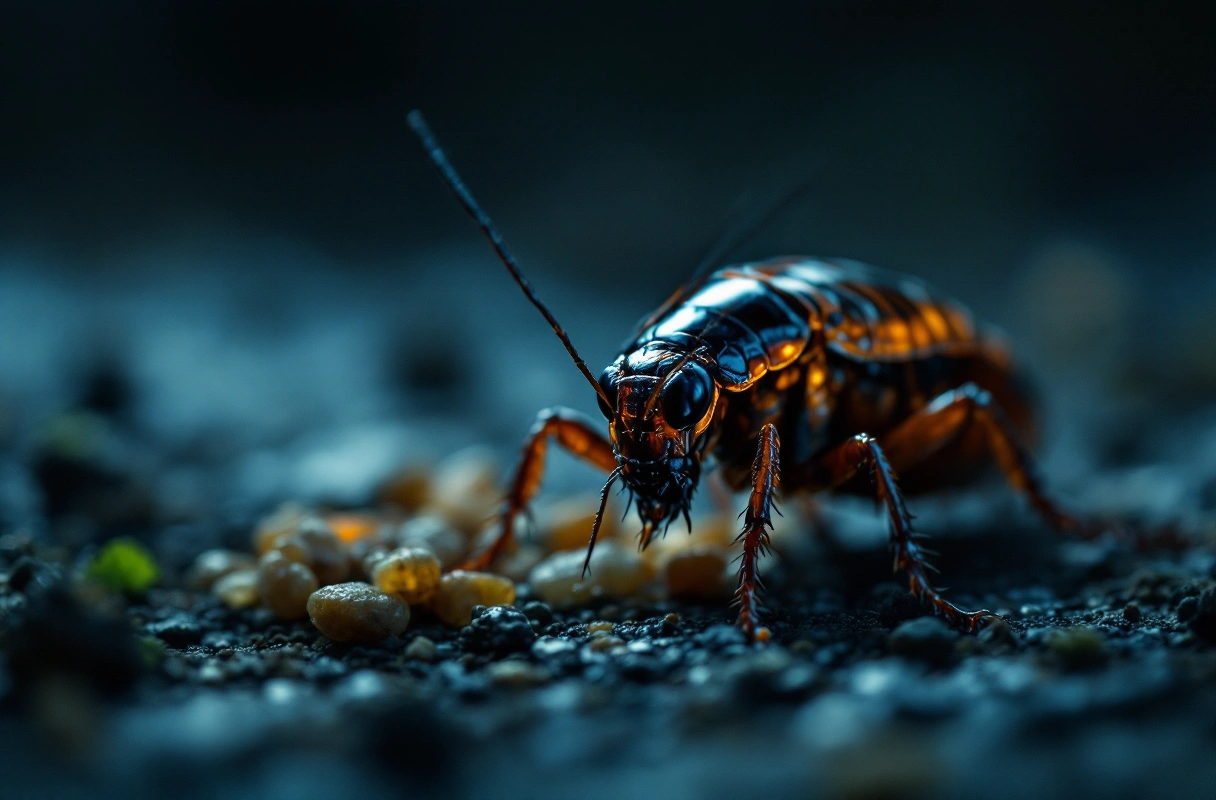
You switch on the kitchen light late at night, only to watch several cockroaches scatter across the floor in different directions. It can be an unsettling sight, especially when your home appears completely pest-free during the day. The kitchen looks clean – there are no obvious signs of insects, and everything seems normal until darkness falls.
Many homeowners wonder why cockroaches seem to disappear during daylight hours but suddenly emerge once the house becomes quiet. The answer lies in their natural behaviour. Cockroaches are nocturnal insects that have evolved to remain hidden when there is light, movement, and human activity. Unfortunately, the few you see at night are often only a small fraction of the population living inside the property.
Why Cockroaches Prefer the Night
Cockroaches are naturally active after dark because night offers the safest conditions for survival. Bright lights, regular household activity, noise, and constant movement increase the chances of them being disturbed or detected. During the day, they stay concealed in protected locations where they are less likely to encounter predators or people.
Once the lights go out and the home becomes quieter, they begin searching for food, water, and suitable breeding areas. Kitchens, laundries, bathrooms, and pantries often become their preferred feeding grounds because these areas provide moisture and access to food residues. Darkness also helps cockroaches conserve moisture, making night-time conditions more favourable for their survival.
Where Cockroaches Hide During the Day
The reason many infestations remain unnoticed is that cockroaches are experts at hiding. They squeeze into narrow spaces that are difficult to inspect without moving appliances or opening structural cavities.
Common hiding places include wall cavities, behind refrigerators and dishwashers, beneath kitchen sinks, inside cupboards, roof voids, storage areas, and tiny cracks around skirting boards or pipe penetrations. These locations provide warmth, darkness, and protection while remaining close to food and water sources.
As the colony grows, these hidden harbourages can support hundreds or even thousands of cockroaches without obvious daytime activity. Homeowners may only become aware of the infestation when the insects venture out after dark.
Why Night-Time Activity Can Indicate a Larger Problem
Seeing one cockroach at night does not necessarily mean there is only one in the home. In fact, night-time sightings often indicate a much larger hidden population.
Cockroaches reproduce quickly under favourable conditions. As numbers increase, competition for food and water also increases, encouraging them to travel further from their harbourage. This is why homeowners who initially notice activity in the kitchen may later begin seeing cockroaches in bathrooms, laundry rooms, bedrooms, or living areas.
If cockroaches are becoming easier to spot at night, the infestation may already be well established behind walls, beneath flooring, or inside inaccessible structural spaces.
Signs the Infestation May Be Established
Night-time sightings are only one warning sign. Established infestations usually leave additional evidence throughout the home, even if the insects themselves remain hidden for most of the day.
Small dark droppings inside cupboards or drawers, discarded egg cases near concealed spaces, persistent musty odours, and cockroaches appearing in multiple rooms often indicate an active breeding population. You may also notice smear marks along walls or around damp areas where cockroaches frequently travel.
These signs suggest the infestation extends well beyond the insects that become visible after dark and may involve several interconnected harbourage locations throughout the property.
Why DIY Treatments Often Miss Hidden Populations
Many over-the-counter sprays and traps are designed to kill the cockroaches that homeowners can see. While these products may reduce visible activity temporarily, they often fail to eliminate the insects hiding deep inside walls, roof voids, cupboards, or beneath appliances.
Spraying exposed cockroaches addresses only a small part of the problem. Eggs remain protected inside hidden locations, and surviving adults continue breeding after the initial treatment. Some insects may even avoid treated surfaces altogether, allowing the infestation to persist.
Without identifying where cockroaches are nesting and travelling, DIY treatments frequently provide only short-term relief rather than long-term control.
Why Timing Matters During Treatment
Successful treatment depends not only on the products used but also on understanding cockroach behaviour. Knowing where cockroaches shelter during daylight and the routes they follow at night allows treatment to focus on the areas where activity is greatest.
Night-time inspections can reveal movement patterns that remain completely hidden during the day. These observations help identify harbourage sites, moisture sources, food availability, and structural gaps that support ongoing infestations.
Targeting these locations increases the likelihood of reaching hidden populations rather than only treating the insects that happen to be visible.
When Professional Help Becomes Important
As sightings become more frequent, many homeowners turn to professional Pest Control Perth Services to investigate hidden infestations and develop treatment strategies that target both visible and concealed cockroach activity.
A thorough inspection considers the entire property rather than focusing only on the kitchen floor or bathroom where cockroaches are seen. Moisture problems, sanitation issues, structural entry points, and breeding locations are all assessed to reduce conditions that allow infestations to continue.
Professional treatment plans are generally designed to interrupt the breeding cycle while targeting both active insects and hidden harbourages.
Why a Cockroach Exterminator Focuses on More Than Visible Pests
A professional Cockroach Exterminator will typically assess breeding areas, entry points, food sources, moisture conditions, and harbourage locations rather than focusing solely on the cockroaches seen during night-time activity.
By locating where insects spend the day, professionals can treat areas that homeowners often cannot safely access. They also evaluate environmental conditions that contribute to recurring infestations, helping reduce the likelihood of future outbreaks.
This broader approach recognises that successful cockroach management depends on addressing the hidden population rather than simply removing the insects visible after dark.
The Cockroaches You See Are Often Only Part of the Story
When cockroaches appear only after dark, it usually reflects their natural behaviour rather than the size of the infestation. Their preference for darkness allows populations to grow unnoticed inside walls, cupboards, roof spaces, and other concealed areas for extended periods.
Understanding where cockroaches hide, why they emerge at night, and how they move throughout a property provides valuable insight into the true extent of the problem. Addressing hidden harbourages early can help prevent a small infestation from developing into a much larger and more difficult issue.
FAQs
Why do I only see cockroaches at night?
Cockroaches are nocturnal insects that avoid light and human activity. They usually emerge after dark to search for food and water.
Does seeing one cockroach at night mean I have an infestation?
Not always, but repeated night-time sightings often suggest there are many more hidden within walls, cupboards, or other sheltered areas.
Where do cockroaches usually hide during the day?
They commonly hide behind appliances, inside wall cavities, under sinks, in roof voids, inside cupboards, and within cracks and crevices.
Why don’t DIY sprays solve the problem permanently?
Most DIY products only affect visible cockroaches, while hidden adults, eggs, and breeding sites remain protected and continue the infestation.
What are the signs of an established cockroach infestation?
Frequent night-time sightings, droppings, egg cases, musty odours, and cockroaches appearing in multiple rooms are common indicators of an established infestation.
When should I contact a pest professional?
If cockroaches continue appearing after treatment, are seen regularly at night, or signs of breeding become evident, a professional inspection is recommended to identify hidden harbourages and determine appropriate control measures.
