

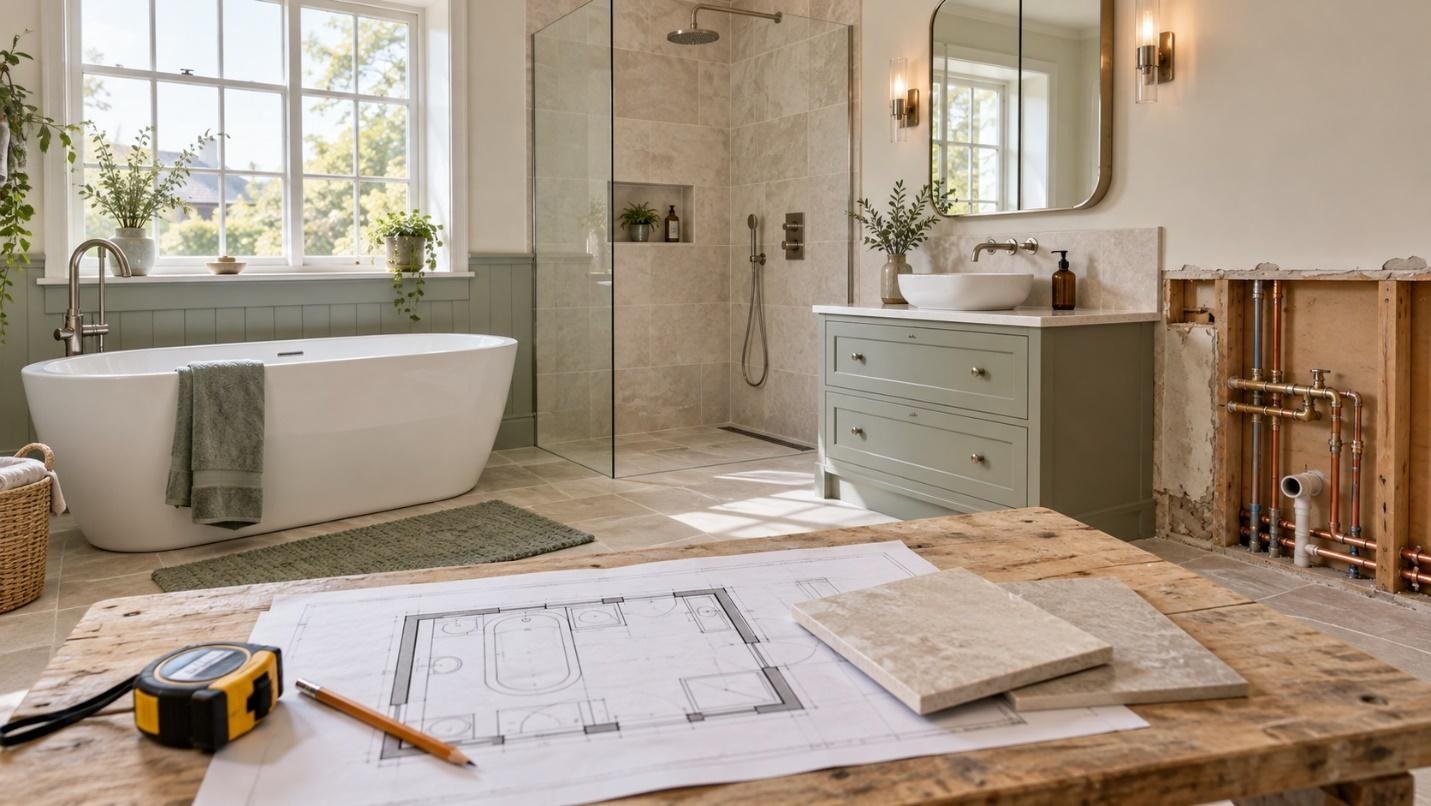
New tiles, stylish taps and a walk-in shower can transform a bathroom, but the finished result depends on decisions made before those fittings arrive. Existing pipework, drainage and available space all influence what is practical. Speaking to a Plumber Dartford service early in the planning process can help homeowners understand their options before committing to purchases. An impressive bathroom should also be comfortable to use, easy to maintain, and suited to the household’s daily routine.
It’s tempting to start with a showroom visit and work backwards from a favourite design. However, choosing products before checking the plumbing can lead to changes, delays and unexpected expenses. Start with how the room needs to function, then develop its appearance around a workable plan.
Keep the Bathroom Layout or Move the Fittings?
One of the biggest decisions is whether to retain the existing positions of the toilet, basin, bath and shower. Keeping a layout that already works may simplify the project, but you still need to check the existing connections.
Moving fittings can improve an awkward room, but the implications extend beyond the visible space. A toilet in a different position needs a suitable drainage arrangement. Relocating a shower may affect pipe routes, floor construction and access for future repairs.
| Layout choice | Potential advantage | Question to resolve |
| Keep fittings in place | May reduce alterations to existing connections | Does the current layout meet your needs? |
| Move the basin | Could improve storage or circulation | How will supply and waste pipes be routed? |
| Replace a bath with a shower | Can change how the room is used | Is the proposed drainage arrangement suitable? |
| Relocate the toilet | May free up useful floor space | What work is needed to connect the waste outlet? |
The best layout is not necessarily the one with the fewest changes. It is the one that delivers a useful improvement with a clear understanding of the work involved.
Choose a Shower That Suits the Water System
A large showerhead may look appealing, but appearance alone doesn’t determine whether a shower will perform as expected. Check product requirements against the property’s water supply and hot-water arrangements.
Before ordering, ask the installer to assess compatibility. This is particularly useful when replacing an existing shower with a different type or adding another shower to the home.
Explain how the household uses hot water. Two people getting ready at the same time present different demands from a bathroom used by one person. Mention any existing problems, such as fluctuating temperature or disappointing flow, so they can be considered during planning.
Choosing the right fitting begins with understanding the system it will connect to.
Agree the Plumbing Work Before Comparing Quotes
Two bathroom quotations can look very different because they cover different tasks. One might include removing old fittings and making good affected surfaces; another may cover installation alone.
Ask for a written description of the proposed work. It should be clear who supplies the products, who removes waste and how additional work will be agreed if hidden problems appear.
Homeowners researching installation options can use PGMplumbingandheating.co.uk as a starting point for an enquiry. When discussing a bathroom project, provide photographs, approximate room measurements and an outline of the changes you want. This helps make the initial conversation more specific.
A useful quotation gives you something concrete to compare beyond the final figure.
Build Maintenance Access Into the Bathroom Design
Concealed pipework creates a clean appearance, but the design must also allow for servicing and repairs. A tiled surface should not make every future inspection unnecessarily difficult.
Discuss access to relevant valves, bath connections and concealed fittings before installation begins. Depending on the design, removable panels or planned access points may provide a practical solution.
Also check how easily everyday components can be reached. A basin unit should allow sensible access to the plumbing inside it, rather than filling the entire cupboard with fixed storage.
These details rarely dominate showroom displays, yet they can make a considerable difference when maintenance is needed.
Coordinate Plumbing With the Other Trades
Bathroom renovation involves several connected stages. Plumbing, electrical work, surface preparation, waterproofing, and finishing need a clear sequence.
Clarify who is responsible for coordinating the project. If you are appointing trades separately, make sure each person understands when their work is needed and what must be ready beforehand.
Product availability matters as well. Confirm delivery dates before arranging installation around fittings that have not arrived. Check supplied items promptly for damage or missing parts.
Agree how long the bathroom is expected to be unavailable, particularly if it is the only one in the property. A realistic timetable helps the household prepare for disruption.
Spend on the Details You Will Use Every Day
A successful bathroom renovation balances appearance with practical comfort. Storage, tap positioning, shower controls, and cleaning access deserve as much attention as tiles and decorative finishes.
Before approving the design, imagine using the room on an ordinary weekday morning. Can you reach what you need? Is there space to move comfortably? Will routine maintenance be manageable?
Planning bathroom plumbing in Dartford around those everyday questions gives the project a clear purpose. Once you agree on the layout, connections, and installation responsibilities, choosing the finishing touches becomes a much more confident decision.
