

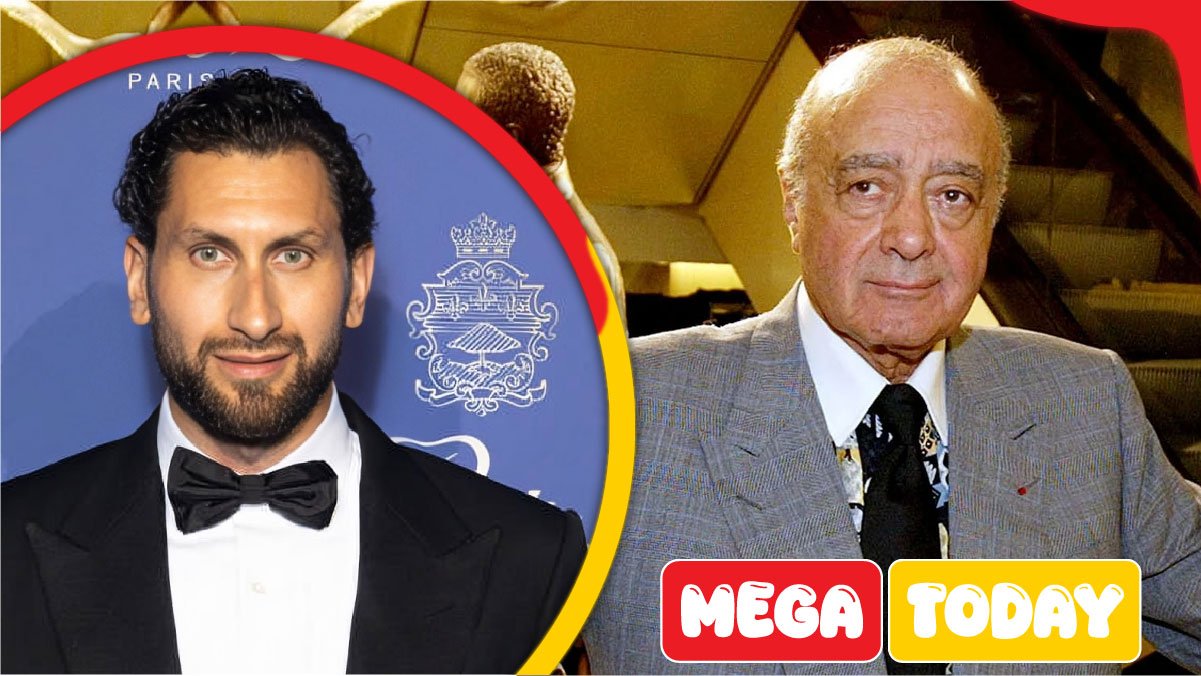
When the world speaks of the Al-Fayed dynasty, the conversation almost always drifts toward the glittering empire of Harrods, the tragic romance of Dodi Fayed and Diana, Princess of Wales, or the towering figure of Mohamed Al-Fayed himself. Yet behind the headlines and the fortune stands a man who has spent his entire life choosing stillness over spectacle. Karim Al-Fayed, the second child of the late billionaire and his Finnish wife Heini Wathén, has carved out a path that defies every expectation placed upon the heir of a global fortune. Deaf since early childhood, deeply private, and quietly ambitious, he represents a side of the Al-Fayed story that few have ever explored. While his siblings have danced in and out of courtrooms and tabloid columns, Karim Al-Fayed has built something far more rare: a life defined on his own terms.
Who Is Karim Al-Fayed?
Karim Al-Fayed is a British-born businessman, photographer, and film producer who is profoundly deaf following a childhood battle with meningitis. He is the second son of the late Mohamed Al-Fayed, former owner of Harrods, and Finnish socialite Heini Wathén, and he has built a quiet career in creative arts, hearing advocacy, and independent production while largely avoiding the family spotlight.
Quick Facts Table
| Fact | Details |
| Full Name | Karim Al-Fayed |
| Date of Birth | 1983 |
| Age | 42 |
| Birthplace | United Kingdom |
| Nationality | British / Egyptian |
| Profession | Businessman, Photographer, Film Producer |
| Known For | Photography exhibitions, Karim Fayed Hearing Centre, film production |
| Education | Mary Hare Grammar School for Deaf Children |
| Marital Status | Married |
| Children | Two (Antonia and Gabriel) |
| Residence | London, United Kingdom |
| Net Worth | Not independently disclosed; part of Al-Fayed family fortune |
| Social Media | Not publicly active |
| Parents | Mohamed Al-Fayed (father), Heini Wathén (mother) |
| Siblings | Jasmine Al-Fayed, Camilla Al-Fayed, Omar Al-Fayed, Dodi Fayed (half-brother) |
| Partner | Brenda Costa (deaf Brazilian supermodel and businesswoman) |
Early Life and Family Background
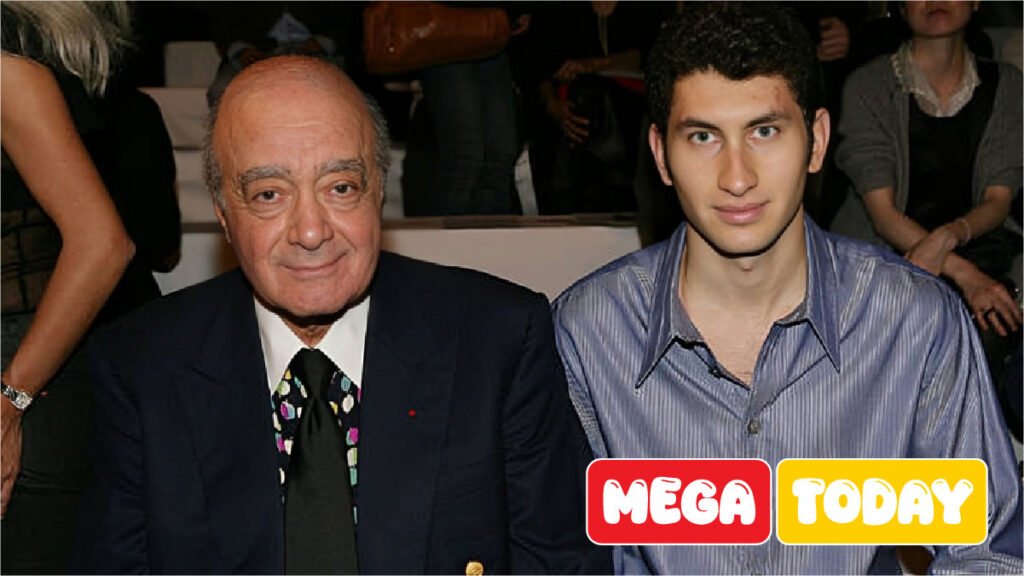
Born in 1983, Karim Al-Fayed entered a world of extraordinary privilege and intense public scrutiny. His father, Mohamed Al-Fayed, had already built a reputation as one of the most controversial and successful businessmen in Britain, having acquired the legendary Harrods department store in 1985 and the Ritz Paris hotel in 1979. His mother, Heini Wathén, was a Finnish former model and socialite who had married Mohamed that same year, immediately becoming a fixture in European high society. For the young Karim Al-Fayed, however, childhood would not follow the predictable script of billionaire heir meets playground. At a very early age, he contracted meningitis, a devastating infection that left him profoundly deaf and forever altered the trajectory of his life. While his siblings would navigate the world through sound, Karim Al-Fayed would learn to perceive it through silence, gesture, and the extraordinary power of visual observation. This early challenge, rather than diminishing him, would eventually become the foundation of his creative identity.
Growing up in the Surrey countryside alongside his siblings Jasmine, Camilla, and Omar, Karim Al-Fayed maintained a close bond with his older half-brother Dodi Fayed, who was twenty-five years his senior. The family estate at Barrow Green Court offered seclusion, but the shadow of their father’s fame was inescapable. According to reports from the Evening Standard, the Al-Fayed children enjoyed a tightly knit upbringing, spending summers in proximity to British royalty and moving through circles that most people only read about in magazines. Yet for Karim Al-Fayed, the world was experienced differently. The deafness that shaped his childhood also gave him a rare distance from the noise of fame, allowing him to observe the theatrical dynamics of his family with a quiet, almost cinematic eye. When Dodi was killed in the 1997 Paris car crash alongside Diana, Princess of Wales, Karim Al-Fayed was only thirteen years old. In a rare interview years later, he admitted that he had been largely unaware of the global media storm surrounding his brother at the time, occupied as he was with school and the private world of a teenage boy processing loss in his own way.
Education and Personal Life
At the age of eleven, Karim Al-Fayed left the familiar surroundings of his family estate to board at the Mary Hare Grammar School for Deaf Children in Newbury, Berkshire, an institution renowned for its rigorous academic standards and supportive community for deaf students. The transition was not easy. For a child who had never spent more than a week away from his parents, the experience of boarding school represented both a profound separation and a necessary step toward independence. In interviews with the Evening Standard, Karim Al-Fayed has spoken candidly about the difficulty of those early years, particularly the struggle to build confidence in social situations. At home, he had been simply one of the children, protected by the warmth of family familiarity. At Mary Hare, he had to learn to communicate, to assert himself, and to construct a new identity beyond the walls of his father’s empire. The school, however, equipped him with invaluable skills, and he has consistently credited it with giving him the tools to navigate a hearing world without surrendering his sense of self.
In his personal life, Karim Al-Fayed has found a partner who shares both his experience of deafness and his preference for a life away from the spotlight. He is married to Brenda Costa, a Brazilian supermodel and businesswoman who is also deaf. According to the Golden Globes, the couple has built a family life in London with their two children, Antonia and Gabriel. Their relationship represents something genuinely rare in the world of celebrity profiles: a union grounded not in headline-grabbing drama but in mutual understanding, shared language, and the quiet solidarity of two people who have both navigated the world through different sensory pathways. While many children of billionaires are drawn toward the flashing bulbs of nightclub entrances and red-carpet premieres, Karim Al-Fayed has consistently chosen introspection. He once told the Evening Standard that he had always tried to treat people equally regardless of status, but that he had encountered individuals who sought his company only because they assumed his surname came with an open wallet. That awareness has made him cautious, discerning, and fiercely protective of his private world.
Career and Individual Achievements
The creative career of Karim Al-Fayed has unfolded across multiple disciplines, each reflecting his deep engagement with visual and narrative expression. Rather than follow his father into the boardrooms of retail and hospitality, he turned toward photography and film production, fields where silence is not a disadvantage but an artistic asset. According to ArtRabbit, he held a solo exhibition titled “Turning 30” at the Richard Young Gallery, showcasing panoramic landscape photography that demonstrated his eye for composition, texture, and atmospheric light. The exhibition represented more than a personal milestone; it announced Karim Al-Fayed as a serious creative practitioner with a distinct aesthetic voice, one shaped by years of observing the world without auditory distraction. His photographic work carries the meditative quality of someone who has learned to see what others merely hear, transforming landscapes into emotional narratives that speak without words.
Also Read: Who Is Sam Rayfield Roach? Exclusive Look at Susanna Hoffs’ Son
In the world of film and television production, Karim Al-Fayed has also established a credible presence. According to IMDb, he served as an executive producer on “Street Fighter: Assassin’s Fist” in 2014 and later on the feature film “Big Gold Brick” in 2022, joining a producing team that included names such as Oscar Isaac and Kristen Wiig. These credits place him within the independent film ecosystem rather than the blockbuster mainstream, a choice consistent with his preference for substantive creative work over commercial spectacle. His involvement in film production suggests a mind drawn to storytelling, to the architecture of narrative, and to the collaborative process of bringing visual worlds to life. It is worth noting that he has also been credited on projects under the name Karim Fayed, reflecting the family’s tendency to drop the “Al” prefix in certain professional contexts. Whether behind the camera or behind the financing, his creative footprint has been deliberate and measured, the opposite of the impulsive celebrity dabbling that often defines heirs with resources to burn.
Perhaps his most distinctive professional achievement, however, lies outside the arts entirely. In 2009, Karim Al-Fayed launched the Karim Fayed Hearing Centre, a London-based clinic dedicated to supporting people with mild hearing loss. According to the Evening Standard, the centre offered free hearing tests, bespoke hearing aids, and professional support to a wide range of clients including young clubbers, DJs, builders, and airport workers. What distinguished the venture was not merely its business model but its philanthropic structure: Karim Al-Fayed pledged that half of all profits would be directed back to his alma mater, the Mary Hare School, ensuring that the institution which had shaped his own life would continue to support future generations of deaf children. This initiative transformed personal experience into public good, positioning Karim Al-Fayed as an advocate rather than a passive beneficiary of privilege.
Relationship with Mohamed Al-Fayed
The relationship between Karim Al-Fayed and his father was complex, layered, and ultimately rooted in the unique circumstances of a deaf child navigating the expectations of a billionaire patriarch. Mohamed Al-Fayed, who died in August 2023 at the age of ninety-four, was a man of volcanic energy, relentless ambition, and public controversy. He built empires, waged legal battles, and pursued vendettas with theatrical intensity. For a son who communicated through sign language and visual observation, the emotional temperature of the Al-Fayed household must have been both overwhelming and instructive. While some of his siblings were groomed for public roles within the family business, Karim Al-Fayed was reportedly never pushed toward the retail or hospitality worlds that defined his father’s legacy. This distance may have been protective, allowing him to develop an identity separate from the dynastic pressures that would eventually fracture relationships among his brothers and sisters.
In the years following Mohamed’s death, the Al-Fayed family became engulfed in what multiple outlets, including the Evening Standard and BBC, described as a “Succession-style battle” over an estimated fortune of £1.7 billion. Reports of physical altercations, High Court disputes, and bitter rivalries between Camilla and Omar painted a portrait of a dynasty in turmoil. Throughout this chaos, Karim Al-Fayed remained notably absent from the headlines. According to sources cited by the Evening Standard, he had declared no strong interest in pursuing family business interests, opting instead for a life centered on creative work, family, and advocacy. This detachment was not indifference but a deliberate choice, the product of a man who had spent his entire life learning to filter out noise and focus on what genuinely mattered to him. While his father’s legacy became entangled with posthumous allegations of sexual assault and abuse, Karim Al-Fayed maintained the silence that had always characterized his public presence, neither defending nor distancing himself through the media.
The death of Dodi Fayed in 1997 had already taught Karim Al-Fayed the brutal cost of public exposure. In a 2009 interview, he reflected on his half-brother with affectionate distance, noting that Dodi had been busy with his own life and that they had not grown up together. The affection was genuine, but so was the recognition that their lives operated on different frequencies. That same awareness likely governed his relationship with Mohamed, a man who demanded loyalty and visibility from those around him. Karim Al-Fayed, by virtue of his deafness and his temperament, existed in a space that his father could not fully occupy, a space of quiet observation that may have ultimately preserved his independence.
Net Worth and Lifestyle 2026
As of 2026, the independent net worth of Karim Al-Fayed remains undisclosed, and any precise figure would be speculative. What is known, according to Forbes, is that his father Mohamed Al-Fayed was estimated to be worth approximately $2 billion at the time of his death in 2023, with British outlets placing the family fortune closer to £1.7 billion. This wealth is distributed across an extraordinary property portfolio that includes the Barrow Green Court estate in Surrey, apartments overlooking Hyde Park in London, a Scottish castle, and multiple residences in New York. As one of four surviving children from Mohamed’s marriage to Heini Wathén, Karim Al-Fayed is positioned as a beneficiary of this inheritance, though the exact distribution remains the subject of private family negotiations and, reportedly, ongoing legal tension among his siblings.
The lifestyle of Karim Al-Fayed, however, bears little resemblance to the gilded excess often associated with billionaire heirs. He resides in London with his wife Brenda Costa and their children, but his public appearances are rare and carefully chosen. He has been photographed at cultural events such as the Royal World Premiere of “Spectre” at the Royal Albert Hall in 2015, and he moves through artistic circles rather than nightclub VIP rooms. His spending priorities, as evidenced by the Karim Fayed Hearing Centre, lean toward purposeful investment rather than conspicuous consumption. In 2026, he appears to maintain a life structured around creative work, family, and advocacy, a triad that reflects the values of a man who has never sought validation through material display. While his siblings have been linked to public feuds and business rivalries, Karim Al-Fayed continues to occupy a quieter register of the Al-Fayed fortune, one where wealth is a backdrop rather than a defining character trait.
Unique Facts and Lesser-Known Details
Among the many children of global billionaires, few have taken a childhood disability and transformed it into both an artistic advantage and a philanthropic mission. The fact that Karim Al-Fayed is profoundly deaf is well known, but the depth of his integration between deaf identity and creative practice is rarely explored. His photography, for instance, carries what critics might describe as a sonic stillness, the visual equivalent of a world experienced without background noise. This is not merely metaphorical; it is a genuine perceptual difference that informs his composition, his patience, and his relationship with time. Where hearing photographers might chase decisive moments defined by sound cues, Karim Al-Fayed works with a different temporal awareness, one that allows him to linger in landscapes and absorb atmospheric shifts that others might overlook.
Another lesser-known dimension of his life involves his marriage to Brenda Costa, a woman who has achieved her own remarkable career as a deaf model and entrepreneur. Their partnership represents one of the few high-profile relationships in the public sphere where both partners share deafness, creating a household built on visual communication and mutual accessibility. For their children, this environment offers a bilingual upbringing in both sign language and spoken language, a cultural richness that transcends the typical narrative of disability as limitation. Additionally, while many assume that all Al-Fayed children were groomed for business, Karim Al-Fayed’s educational path at Mary Hare and his subsequent creative career demonstrate a family flexibility that is often erased by the stereotype of rigid dynastic expectation. His half-brother Dodi pursued film production, and Karim Al-Fayed followed a similar thread, suggesting that Mohamed Al-Fayed may have harbored a quiet respect for cinematic ambition that his retail empire never fully satisfied.
Conclusion
Karim Al-Fayed remains one of the most intriguing yet least understood figures in the Al-Fayed dynasty. Born into unimaginable wealth and public scrutiny, he chose a life defined not by the volume of his presence but by the quality of his silence. Deaf since toddlerhood, he transformed a condition that might have isolated him into a lens through which he observes and creates with rare clarity. His work in photography, film production, and hearing advocacy speaks to a man who has never waited for permission to define his own identity. While the Al-Fayed name will forever be linked to Harrods, to Dodi, and to the controversies of Mohamed, Karim Al-Fayed has quietly written a different story, one that belongs entirely to him. In a world obsessed with visibility, he has mastered the art of being fully present without demanding the spotlight. That, perhaps, is his most remarkable achievement of all.
Frequently Asked Questions
Who is Karim Al-Fayed and why is he deaf?
Karim Al-Fayed is the second son of the late billionaire Mohamed Al-Fayed and Finnish socialite Heini Wathén. He is profoundly deaf as a result of contracting meningitis when he was a toddler, an illness that damaged his hearing permanently and shaped his entire life trajectory toward visual arts and creative expression.
What does Karim Al-Fayed do for a living?
Karim Al-Fayed works as a businessman, photographer, and film producer. He has held photography exhibitions at the Richard Young Gallery, served as an executive producer on independent films such as Big Gold Brick and Street Fighter: Assassin’s Fist, and founded the Karim Fayed Hearing Centre to support people with hearing loss.
Who is Karim Al-Fayed married to and does he have children?
Karim Al-Fayed is married to Brenda Costa, a deaf Brazilian supermodel and businesswoman. Together they have two children, a daughter named Antonia and a son named Gabriel, and the family is based in London according to public reports.
Is Karim Al-Fayed involved in the Al-Fayed family inheritance dispute?
According to reports from the Evening Standard, Karim Al-Fayed has declared no strong interest in pursuing family business pursuits or engaging in the public inheritance battles that have reportedly divided his siblings Camilla and Omar. He has maintained a low profile throughout the family succession struggle.
How is Karim Al-Fayed related to Dodi Fayed?
Karim Al-Fayed is the half-brother of Dodi Fayed, who was the eldest son of Mohamed Al-Fayed from his first marriage to Samira Khashoggi. Dodi was twenty-five years older than Karim and died in the 1997 Paris car crash alongside Diana, Princess of Wales, when Karim was just thirteen years old.
Written by an entertainment journalist covering celebrity profiles and pop culture.
Visit Our Site for More: MegaToday
Stay connected with MegaToday—reach out to us for inquiries, feedback, or partnerships.
